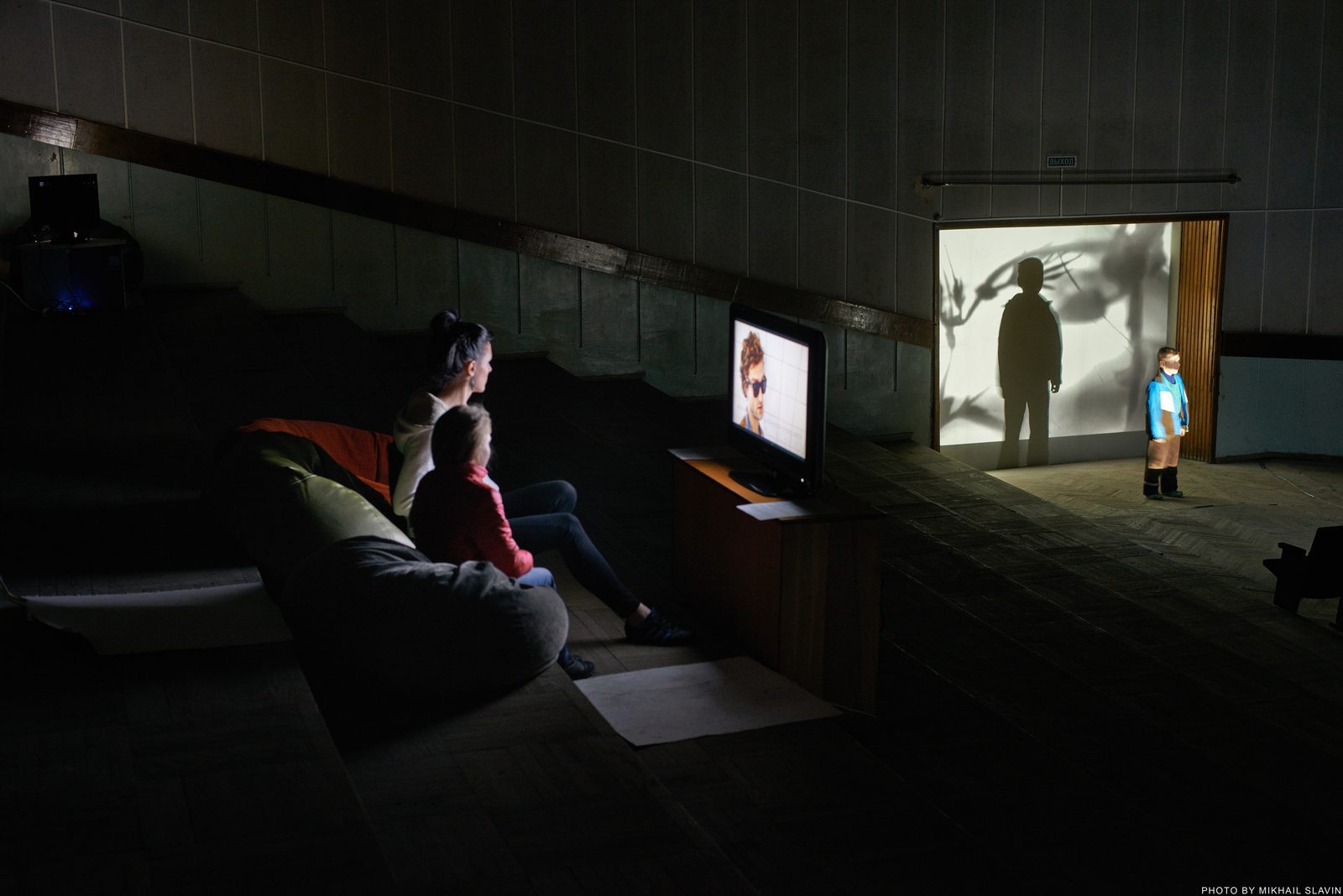
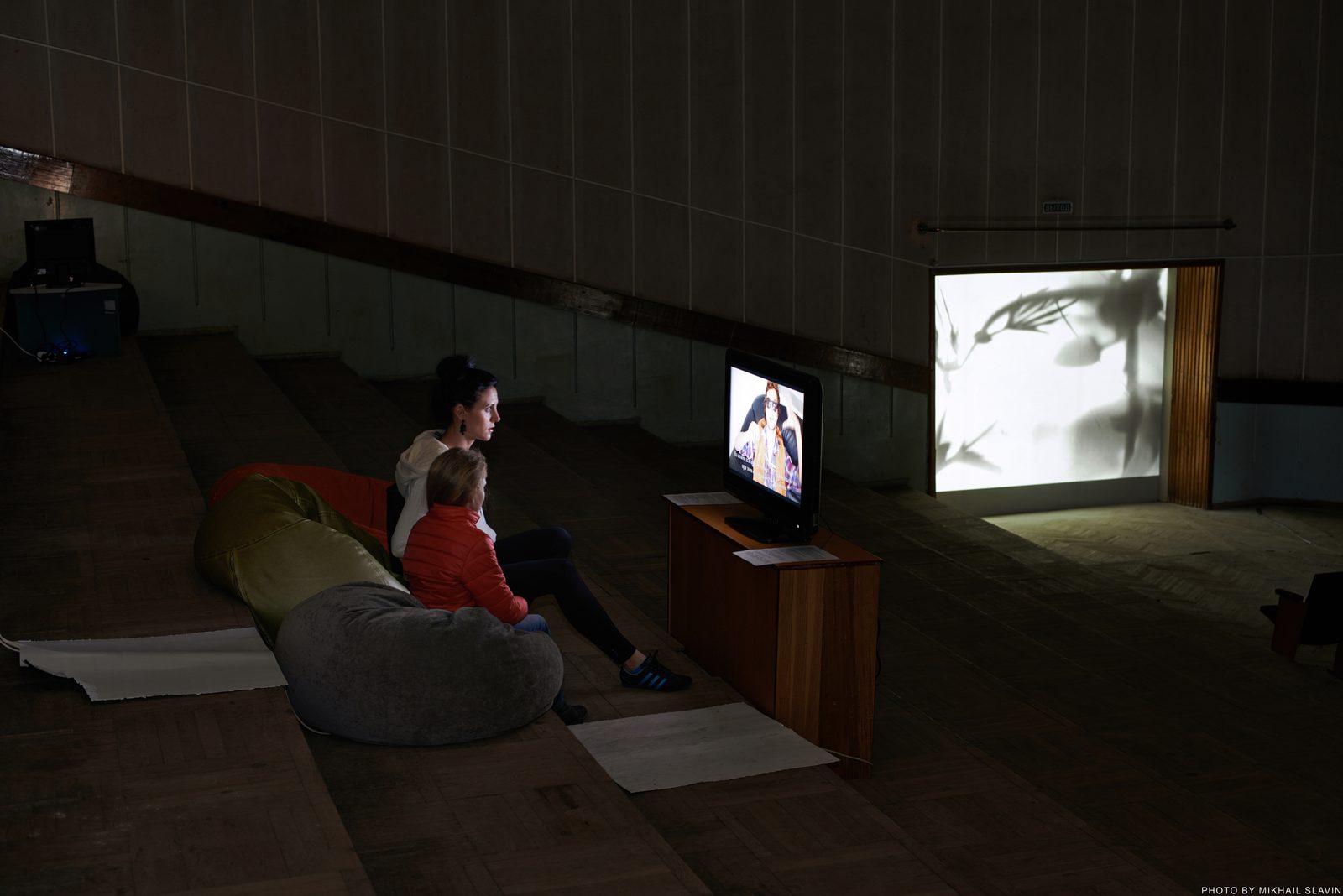
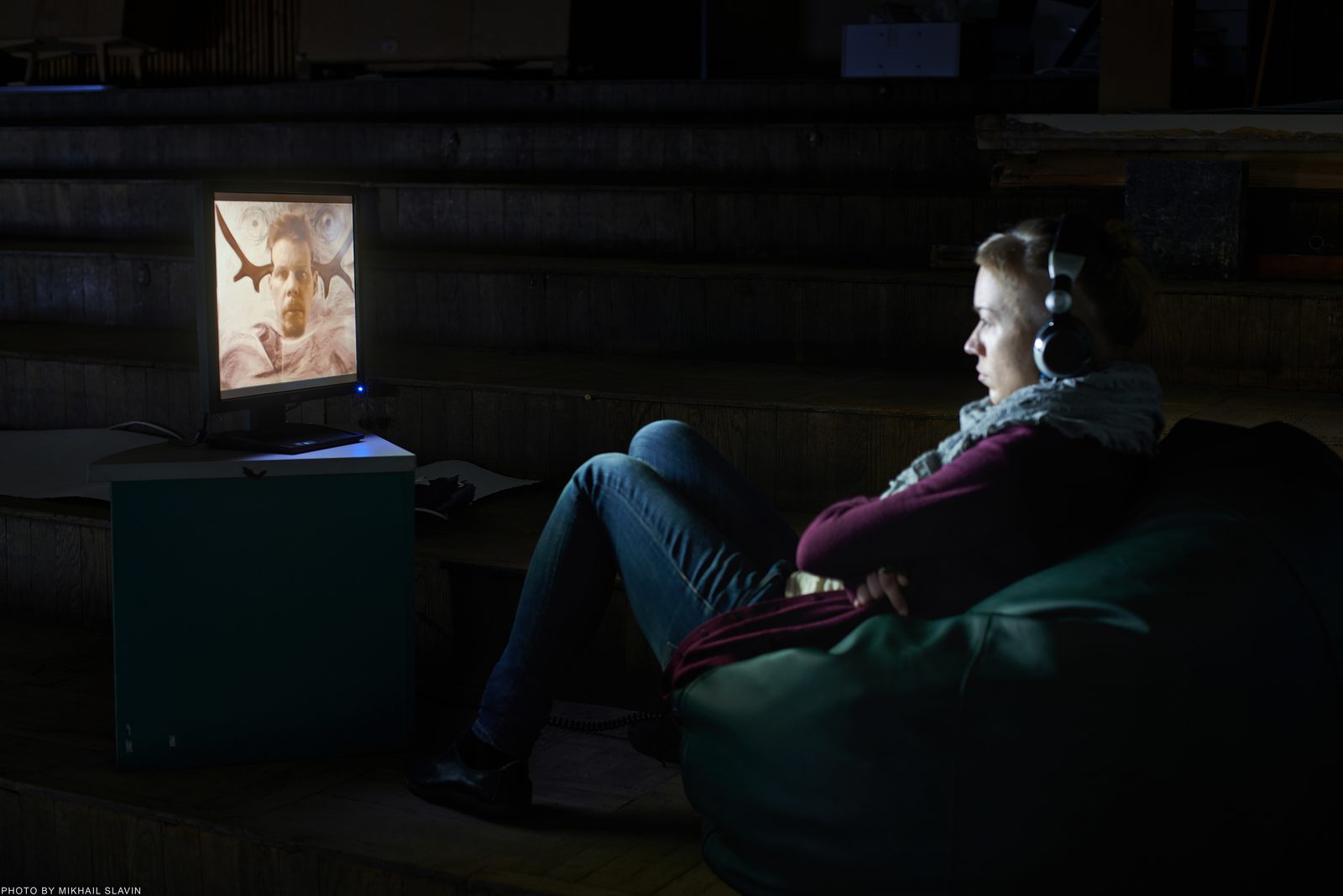
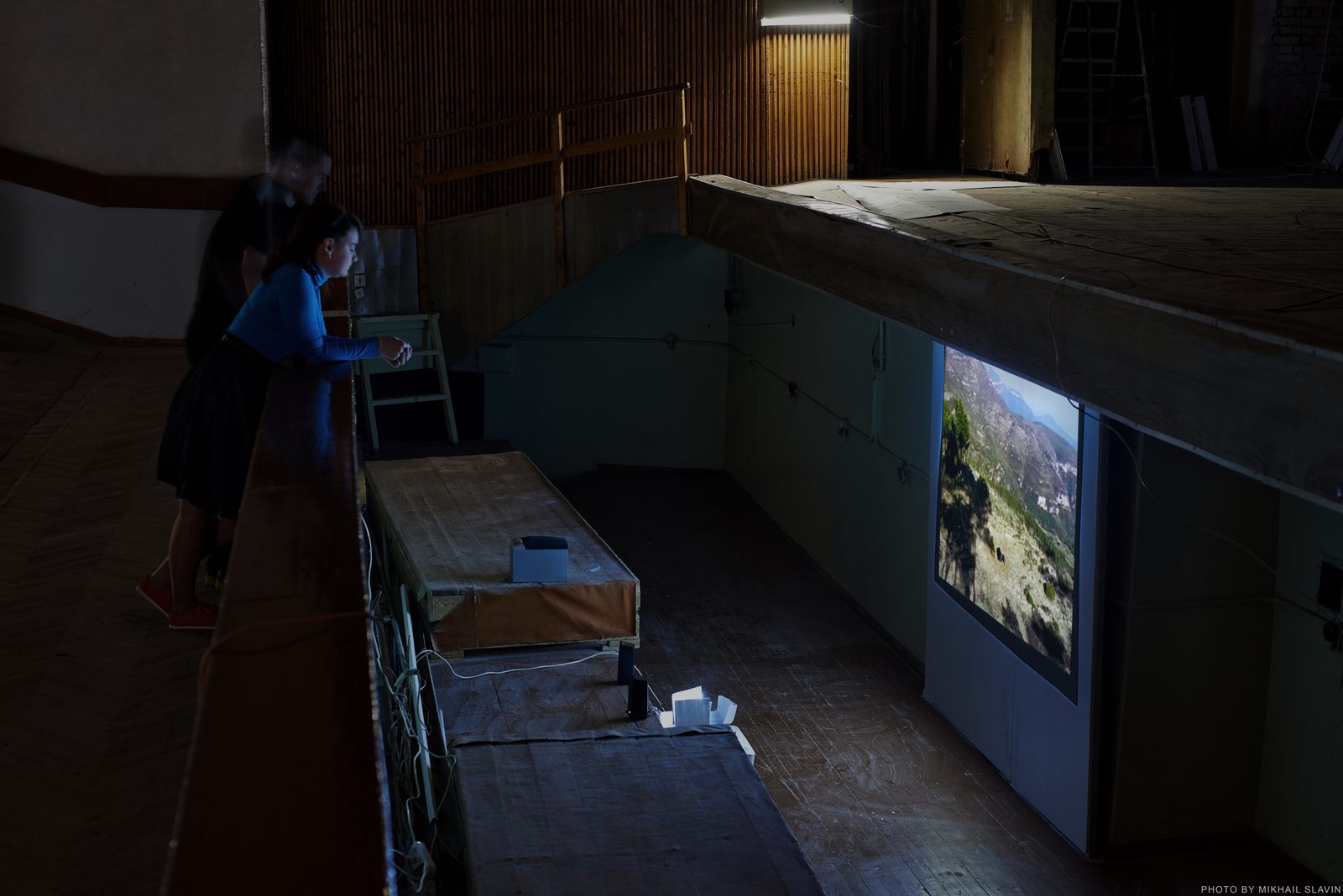
Induction (Индукция) brought together eight video works by artists from Norway, the Netherlands and Finland — the first video art exhibition of its kind in Murmansk. The works share a meditative register and a turn toward self-reflection, made with a deliberately wide range of means: documentary footage, animation, fragments of feature films, video blog, surveillance-camera recordings and performance documentation.
The selection follows the principle the title names. Induction (Lat. inductio, "leading in") reasons from the particular to the general: single observations, held together by their repetition, are what a general statement is built from. If what the works have in common is that they are all video, their particularity lies in how differently each artist approaches it. The visitor is invited to draw their own conclusions and bring the artists' private thoughts to a common denominator — conclusions that can only be subjective, and that may change with time.
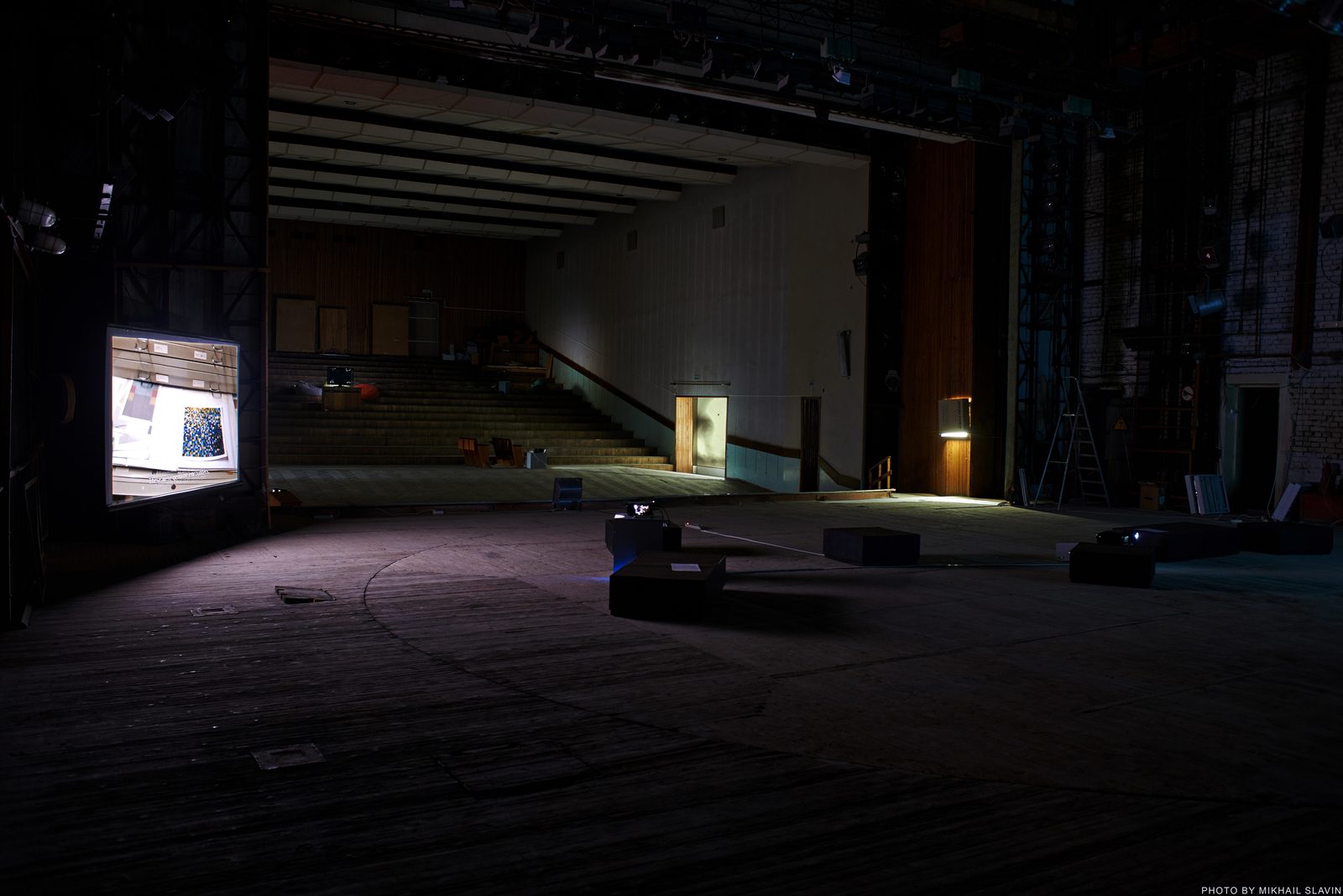
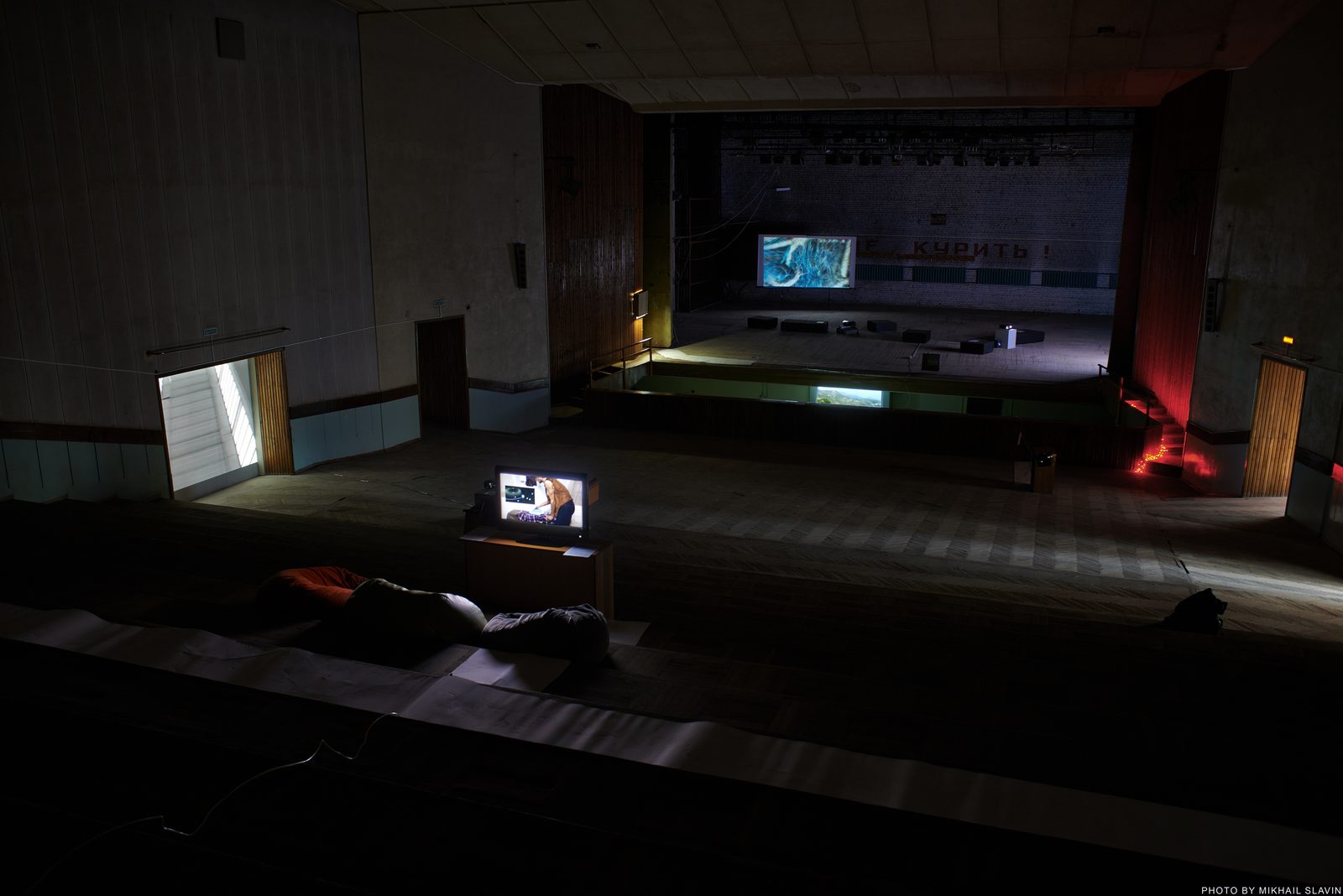
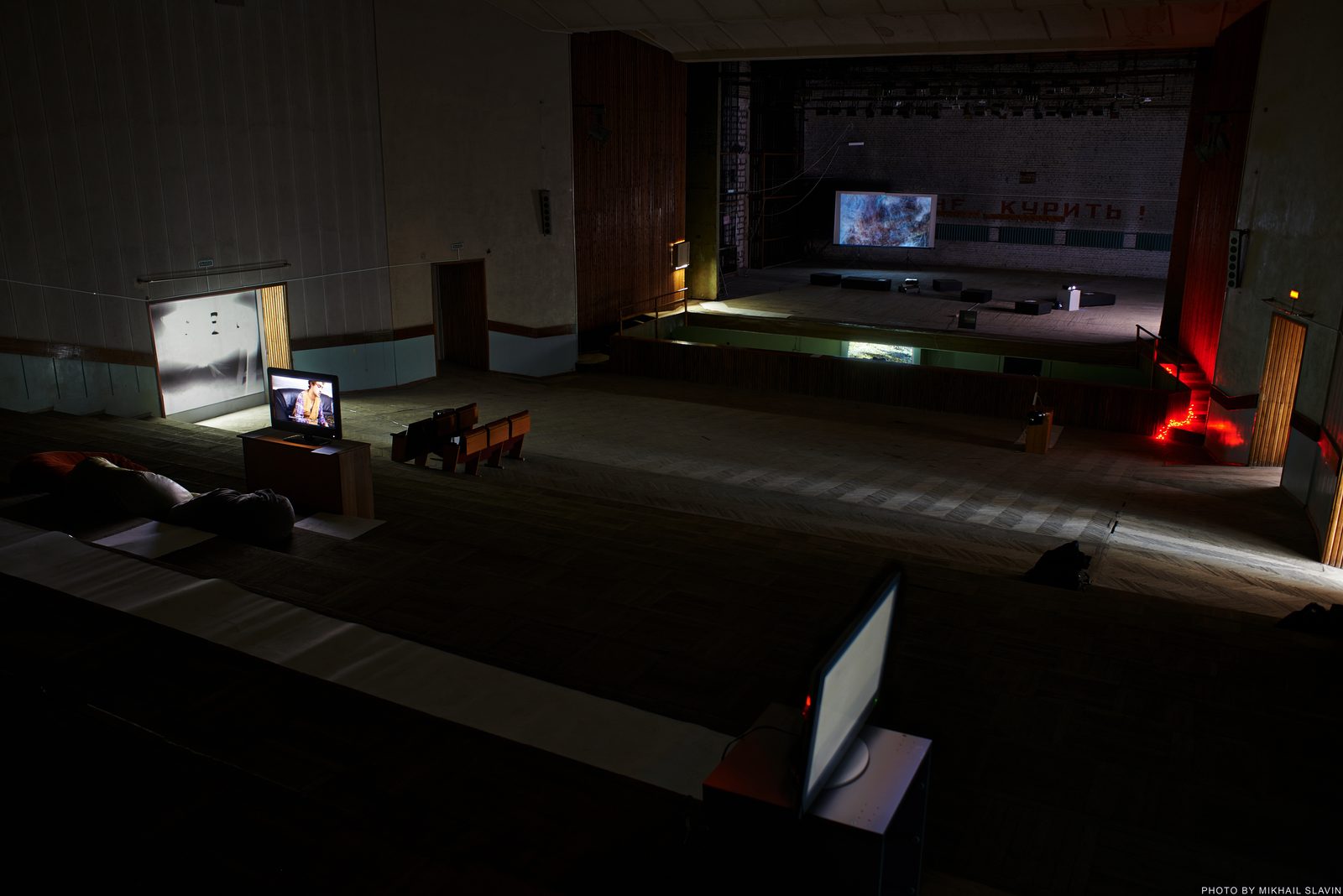
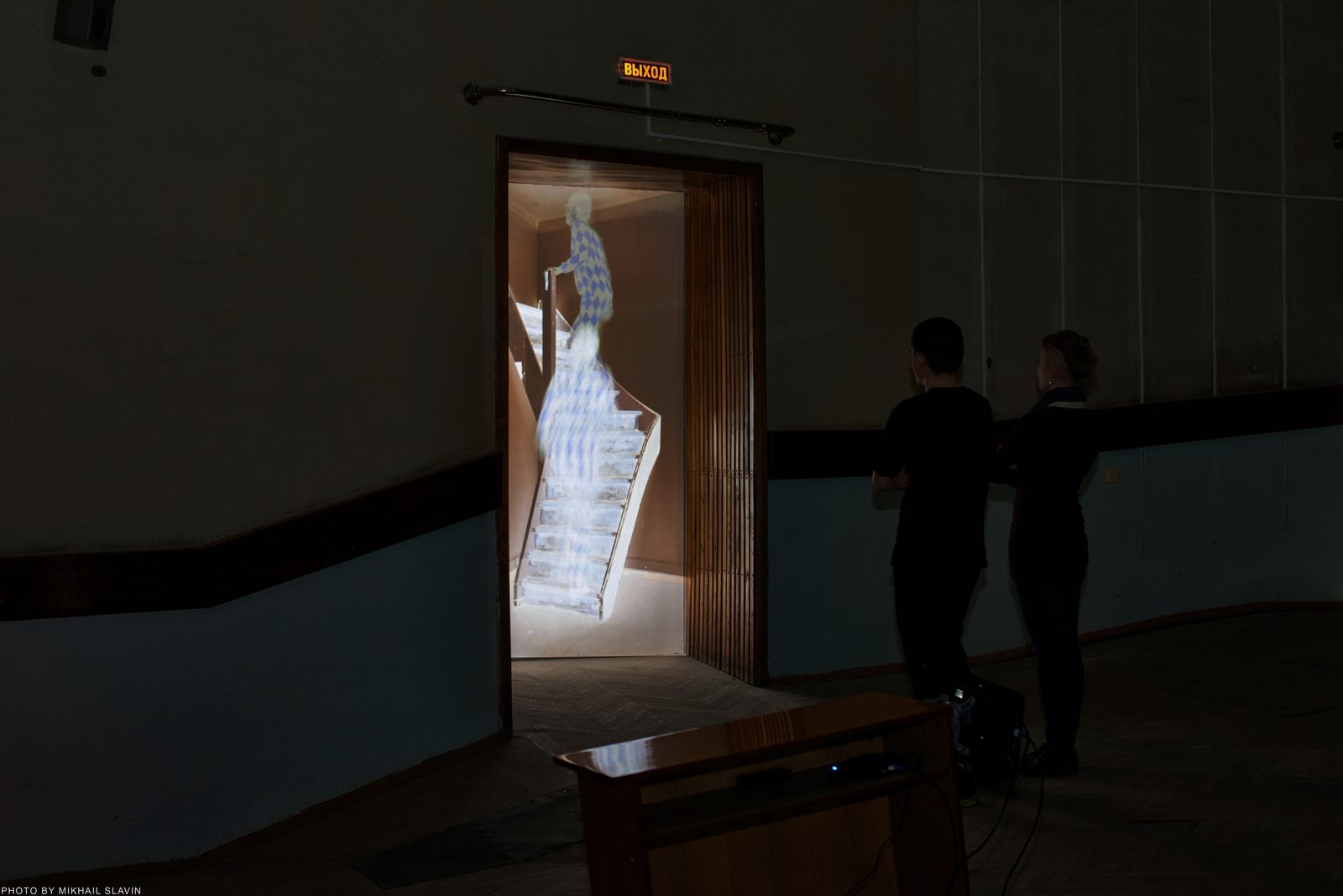
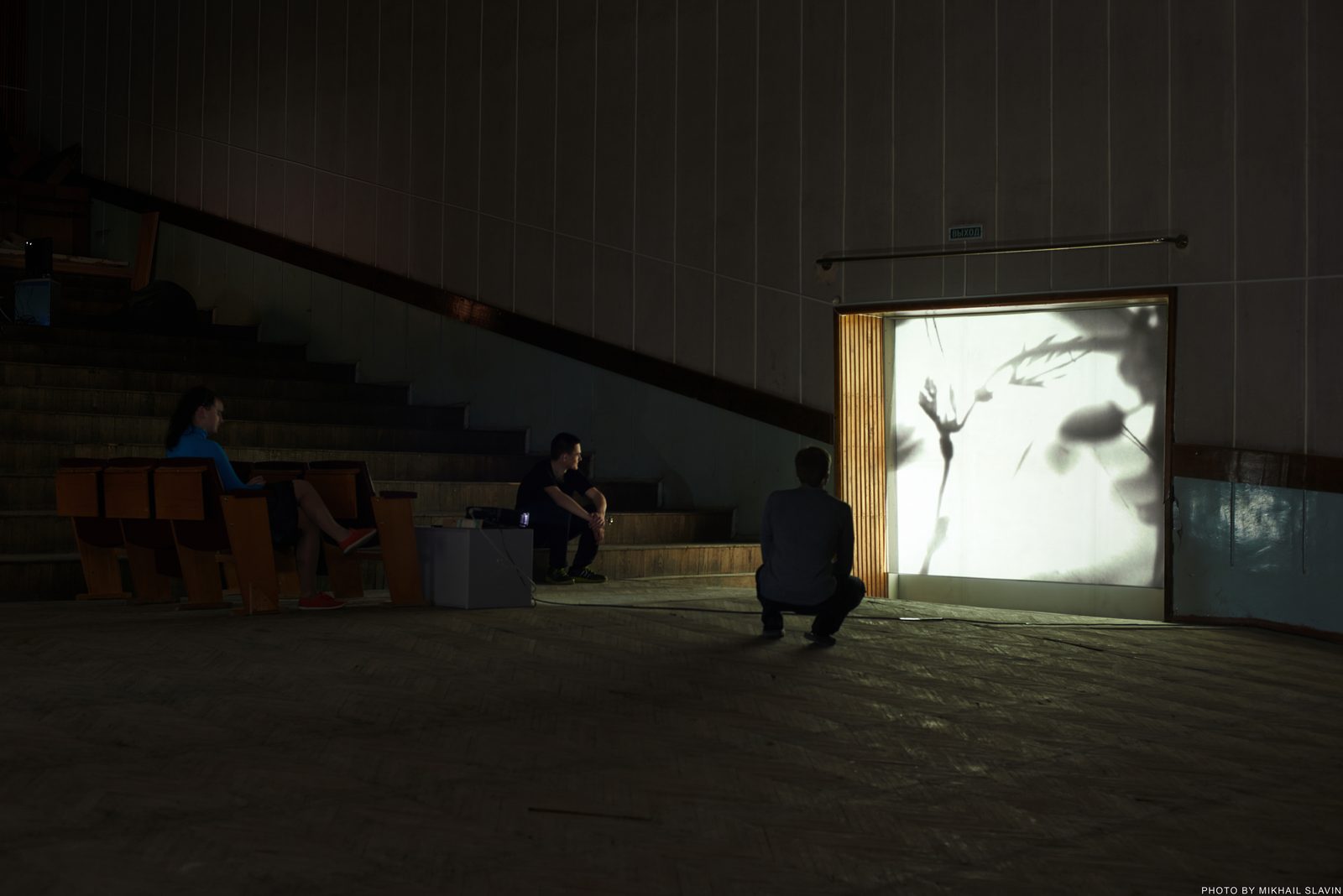
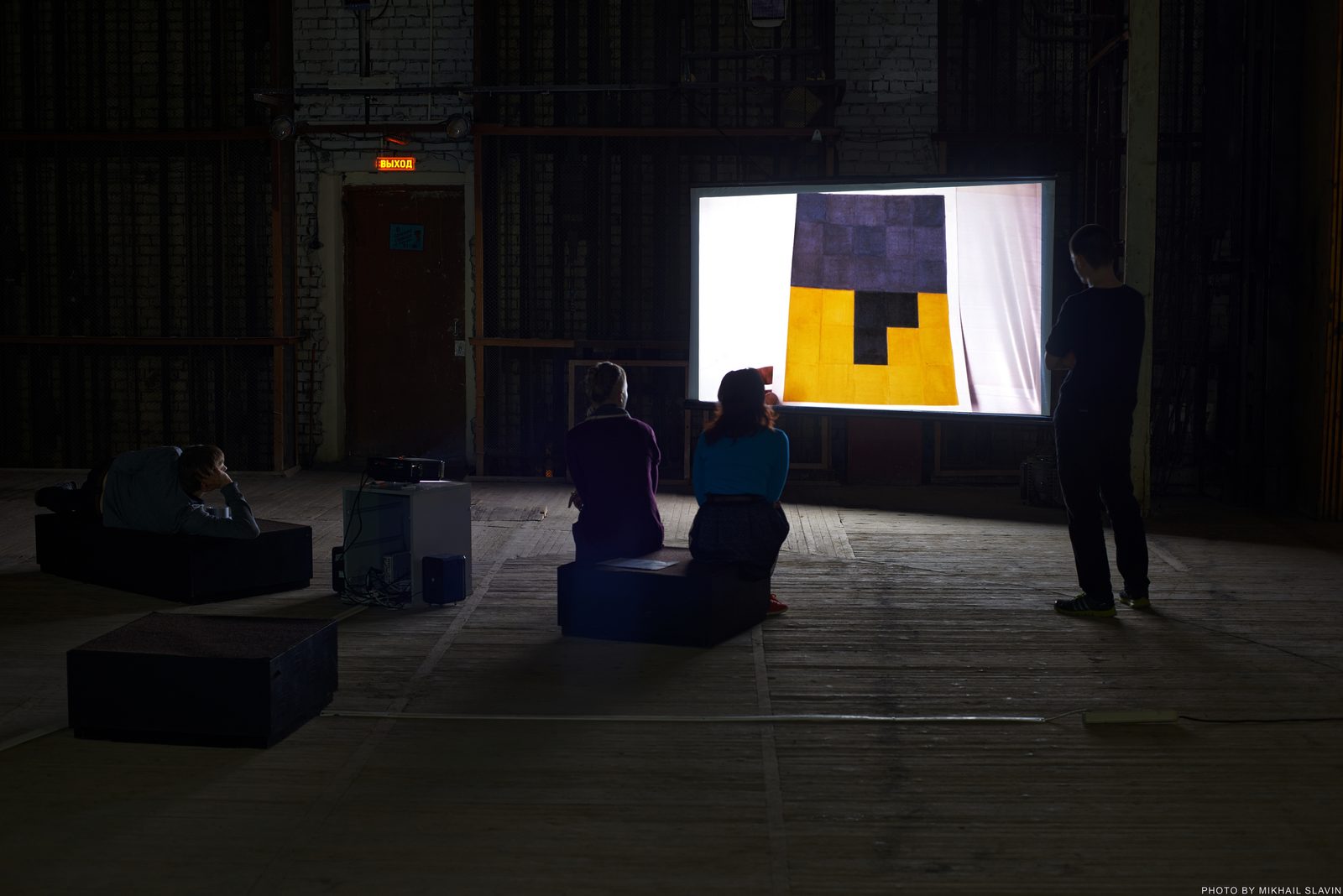
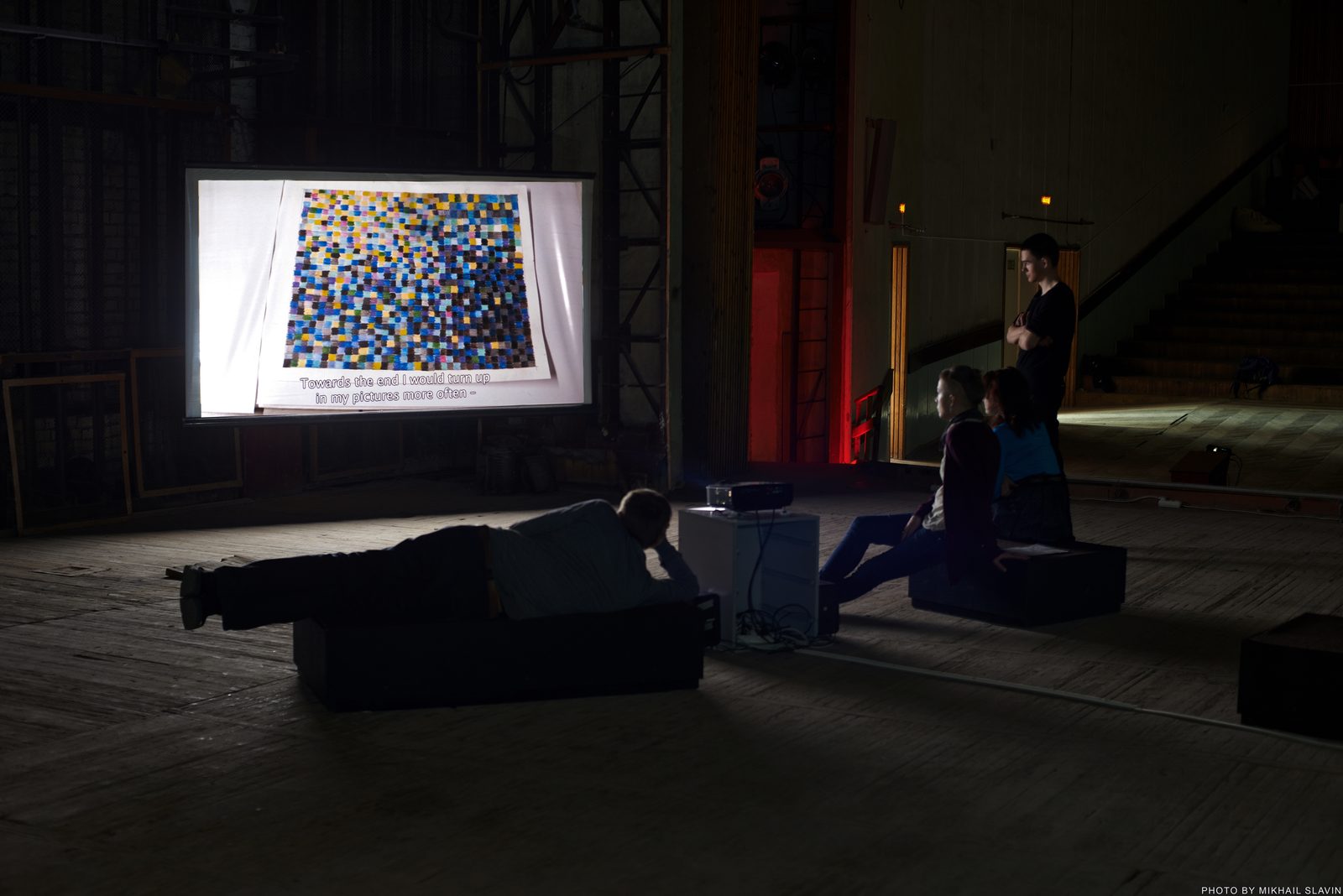
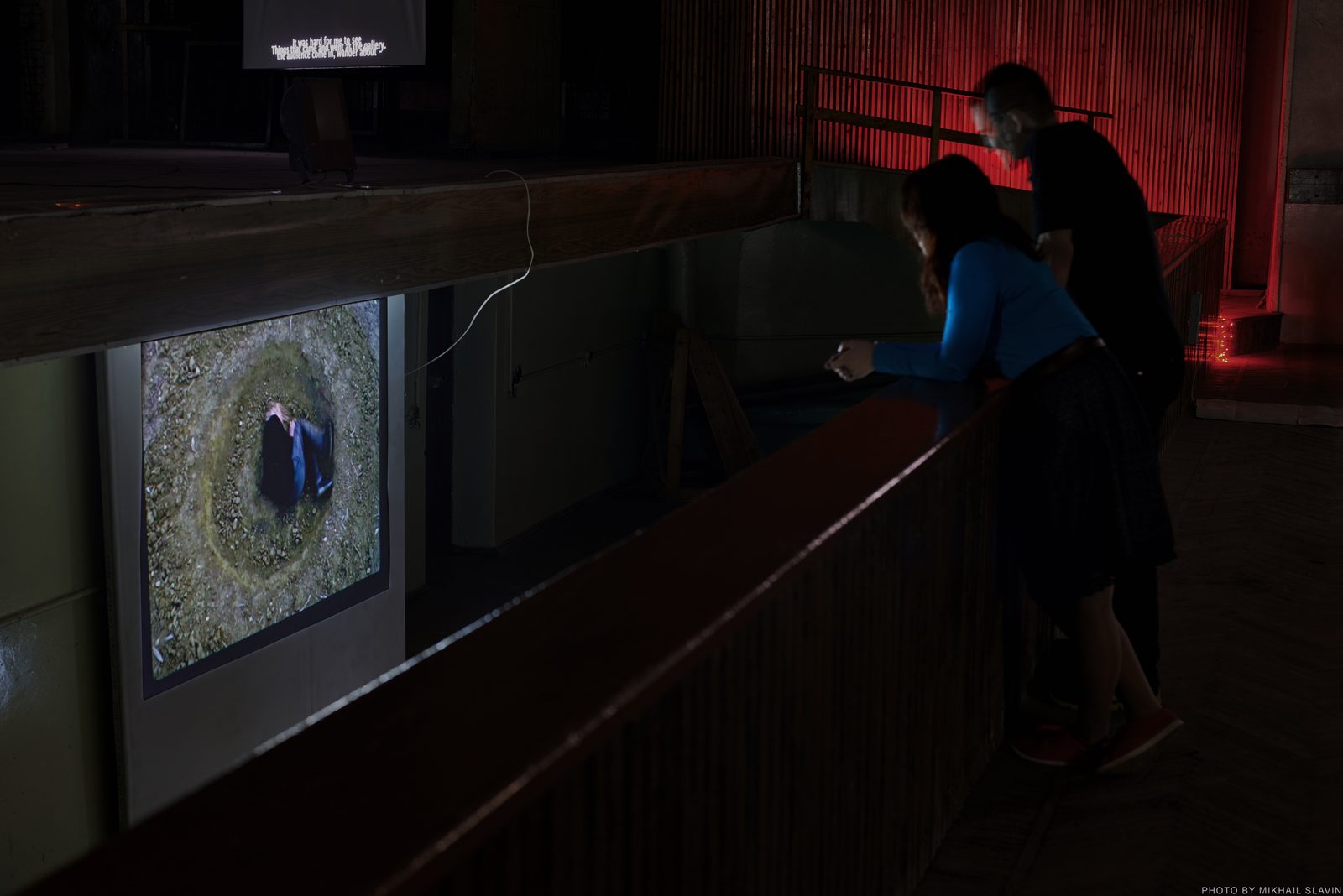
The exhibition was installed in the auditorium of a former house of culture, a room built for showing films, and the placement made use of it. Roderick Hietbrink's and Andrea Bakketun's videos were set into the doorways, as if hesitating to join the main programme, while Kaia Hugin was buried down in the orchestra pit, trying to dig through to the other side of the planet. The different levels and positions in the hall let each work be seen from a different angle.
Induction is the first part of a trilogy. Deduction followed in Murmansk in 2016, and Abduction closed it outdoors at Kontraskjæret in Oslo in 2020.
Works
Jouko Alapartanen (FI)
Talking Tree, 2015
digital video animation · 03:30
Balanced between abstract reflection on time and the artist's own experience: a symbolic image of speaking nature, an animated self-portrait and footage of the Kola Bay, assembled into an odd attempt to join the invented to the real.
Andrea Bakketun (NO)
Pinhole cam registrations 2009–13, 2013
digital video, b/w, silent · 47:58
Recorded with a pinhole — the simplest possible surveillance camera — and finding the poetic in the everyday. The smallest changes of light and shadow cannot be caught at a glance; they emerge only under long looking. The viewer is asked to stop and feel time move.
Lars Brekke (NO)
The Shape of Jazz to Come, 2010–2013
digital video · 02:41
Named after Ornette Coleman's 1959 free-jazz album. Brekke asks, ironically, what the avant-garde amounts to for an artist today, moving from idle speculation about quantum physics to sound improvised on kitchen utensils — the scale of problems set against the process of solving them.
Ivan Galuzin (NO)
Impossible Singularity, 2014
digital video · 30:00
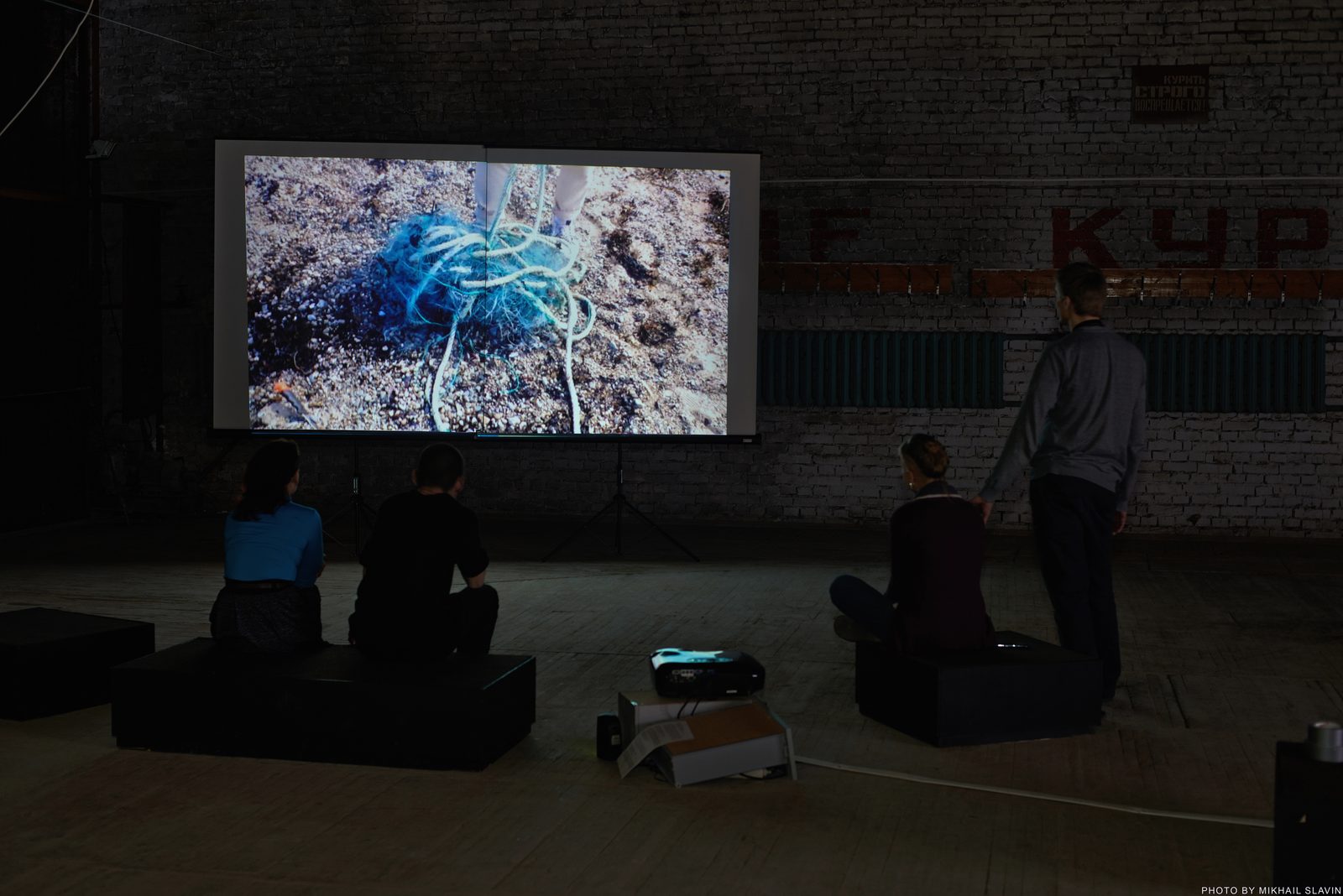
Untangling a found fishing net becomes the object of an abstract performance.
Ane Hjort Guttu (NO)
Uten tittel (Byen om natta) / Untitled (The City at Night), 2013
digital video · 25:10
The soundtrack is built from an interview with an anonymous artist who spent twenty years on a single project never meant to be shown: an archive of abstract drawings recording situations and incidents on her night walks through Oslo.
Kaia Hugin (NO)
Motholic Mobble (part III), 2009
digital video · 06:38
Part of a series of performances under the title Motholic Mobble. Uncompromising bodily work through monotonous, repeating movement: Hugin slowly bores her own body into the ground, trying to fit the place to herself and leave her trace in it.
Roderick Hietbrink (NL)
Upstairs, 2011
digital video · 12:58
Hietbrink often stages situations with no way out, and the mismatch between nature and human culture. Upstairs is a trap: a figure in the Harlequin costume of the commedia dell'arte imitates movement in a futile attempt to reach the top of the stairs.
Vemund Thoe (NO)
Vessels, 2014
digital video · 03:22
Amateur footage from a home-built flying machine, a night motorway, and a scene from Werner Herzog's Aguirre, the Wrath of God — a short sketch about travel by land, air and sea that becomes a poetic question about the human place in the web of vessels.